
The System Is Four Parts Working as One
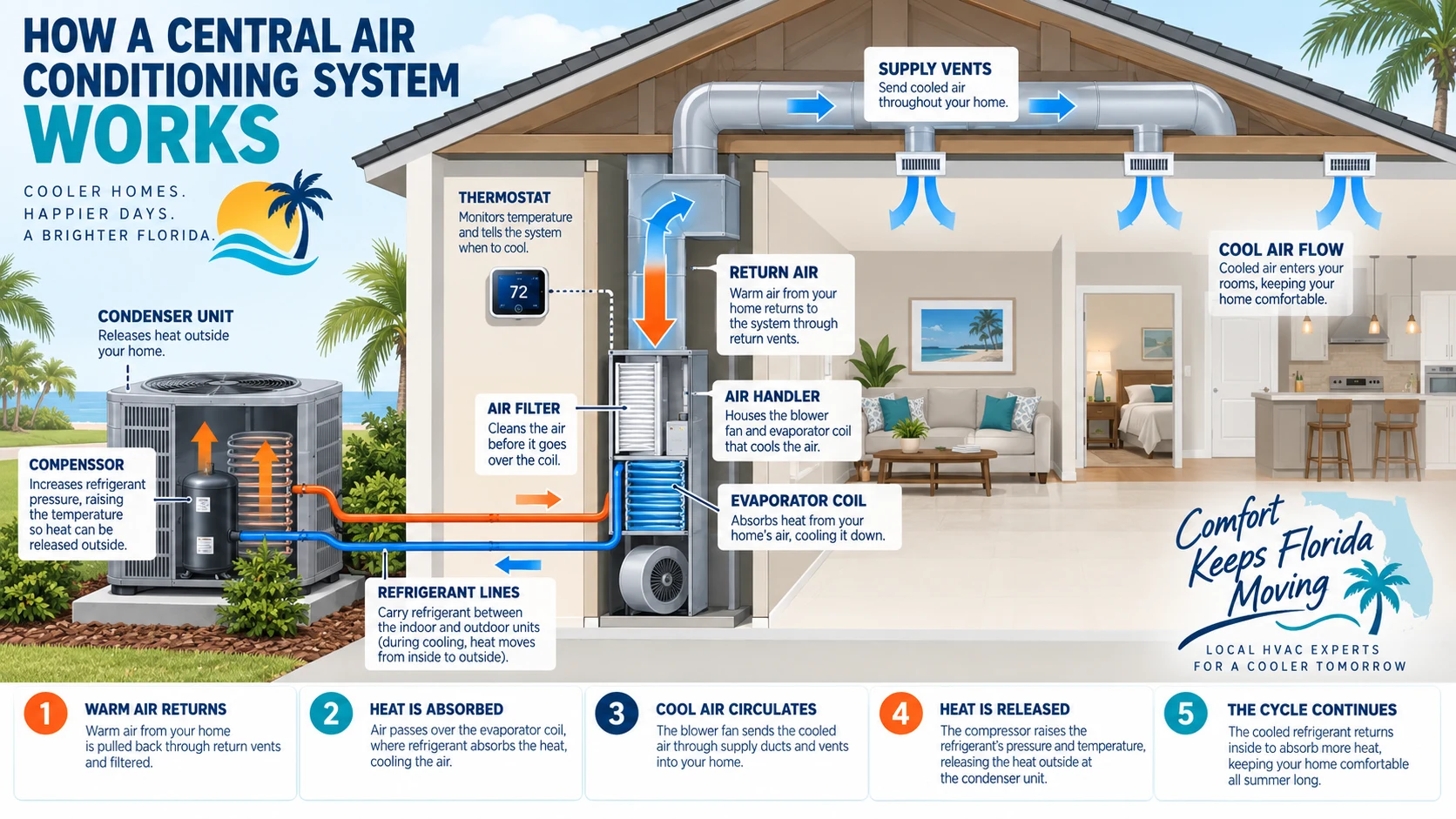
Homeowners tend to think of "the AC" as a single box, but a central system is really four connected sections. The outdoor unit contains the compressor and condenser coil, which move heat out of the house. The indoor unit — either an air handler or a furnace with an evaporator coil — moves heat out of the air and pushes cooled or warmed air into the ducts. The duct system distributes that air to every room. The thermostat and low-voltage wiring tell all of it when to start, stop, and switch modes. A failure in any one section can produce symptoms that look like they belong to a different section entirely, which is why whole-system HVAC repair starts with figuring out where a problem actually originates rather than where it shows up.
What the Outdoor Unit Is Telling You
The outdoor unit is usually the most exposed part of the system in Palm Bay's climate, sitting in direct sun and humidity for most of the year. Symptoms that point here include a compressor that hums but doesn't start, a fan that isn't spinning while the compressor runs, ice forming on the refrigerant lines, or the unit cycling on and off in short bursts. These usually trace back to electrical components (capacitors, contactors, or the compressor windings), a refrigerant charge that's low from a leak, or a condenser coil so coated in dirt and grass clippings that it can't reject heat properly.
What the Indoor Unit Is Telling You
Inside, the evaporator coil and blower are doing the opposite job — pulling heat and moisture out of the house air. Warm air blowing from the vents, weak airflow, water around the indoor unit, or a musty smell usually point here. A frozen indoor coil is a common symptom that can actually originate from either side of the system: low refrigerant, a dirty filter restricting airflow, or a failing blower motor can all cause ice to form on the coil. For more detail on blower motors, coils, and drainage, see air handler repair.
What the Ducts Are Telling You
Ducts rarely fail dramatically, but they fail quietly and constantly. Rooms that never cool evenly, a system that runs long cycles without satisfying the thermostat, or a noticeable pressure change when you close interior doors can all point to duct problems — disconnected sections, crushed flex duct, or leaks pulling in hot attic air. Because duct problems change the amount of air the system has to move, they can also make an otherwise healthy compressor or blower work harder than it should, shortening its life. Duct-specific symptoms and fixes are covered on the ductwork repair page.
What the Controls Are Telling You
The thermostat and its wiring sit between the homeowner and every mechanical part of the system. A blank display, a system that won't respond to a temperature change, or one that runs the fan but never starts cooling can be a controls issue rather than a mechanical one. Because a tripped safety float switch on the condensate drain pan will also cut power to the thermostat on many systems, a "dead thermostat" complaint sometimes turns out to be a full drain line. See thermostat repair for more on distinguishing a controls fault from a system fault.
Three Problem Families: Airflow, Refrigerant, and Electrical
Almost every HVAC complaint falls into one of three families. Airflow problems come from dirty filters, blocked returns, closed vents, or duct restrictions — they show up as weak air, uneven cooling, or a frozen coil. Refrigerant problems come from leaks or an incorrect charge — they show up as warm air, long run times, and ice on the outdoor lines. Electrical problems come from failing capacitors, contactors, control boards, or wiring — they show up as a system that won't start, trips breakers, or cycles unpredictably. Sorting a symptom into the right family before opening any panel is what keeps a repair focused instead of turning into guesswork.
| Symptom | Likely Family | Component to Check |
|---|---|---|
| Warm air from vents | Refrigerant | Compressor, refrigerant charge |
| Weak airflow, one room hot | Airflow | Filter, ducts, blower |
| System won't start, breaker trips | Electrical | Capacitor, contactor, wiring |
| Ice on indoor or outdoor coil | Airflow or Refrigerant | Filter, blower, or charge level |
What a System-Level Diagnosis Looks Like
A thorough visit checks the thermostat call first, then electrical readings at the outdoor unit, refrigerant pressures against manufacturer specification, static pressure and airflow through the filter and ducts, and condensate drainage at the indoor coil. Readings across these areas are compared to each other, not just to a single spec sheet, because a system that reads "normal" in isolation can still be undersized for the ducts it's connected to or struggling because of a dirty filter upstream.
Describe what the system is doing
Call 321-334-2567 or send a service request with the symptoms — warm air, weak airflow, strange noises, or a dead thermostat all point diagnosis in a different direction.
When to Call Before It Gets Worse
Ice on a line, a breaker that trips more than once, or water pooling near the indoor unit are reasons to stop running the system and get it looked at rather than waiting. Continuing to run a system with an electrical fault or a refrigerant leak tends to turn a contained repair into a compressor replacement. Call 321-334-2567 to check current availability, or use the AC repair cost calculator to get a sense of cost ranges before scheduling, and see the FAQ page for more general questions.