
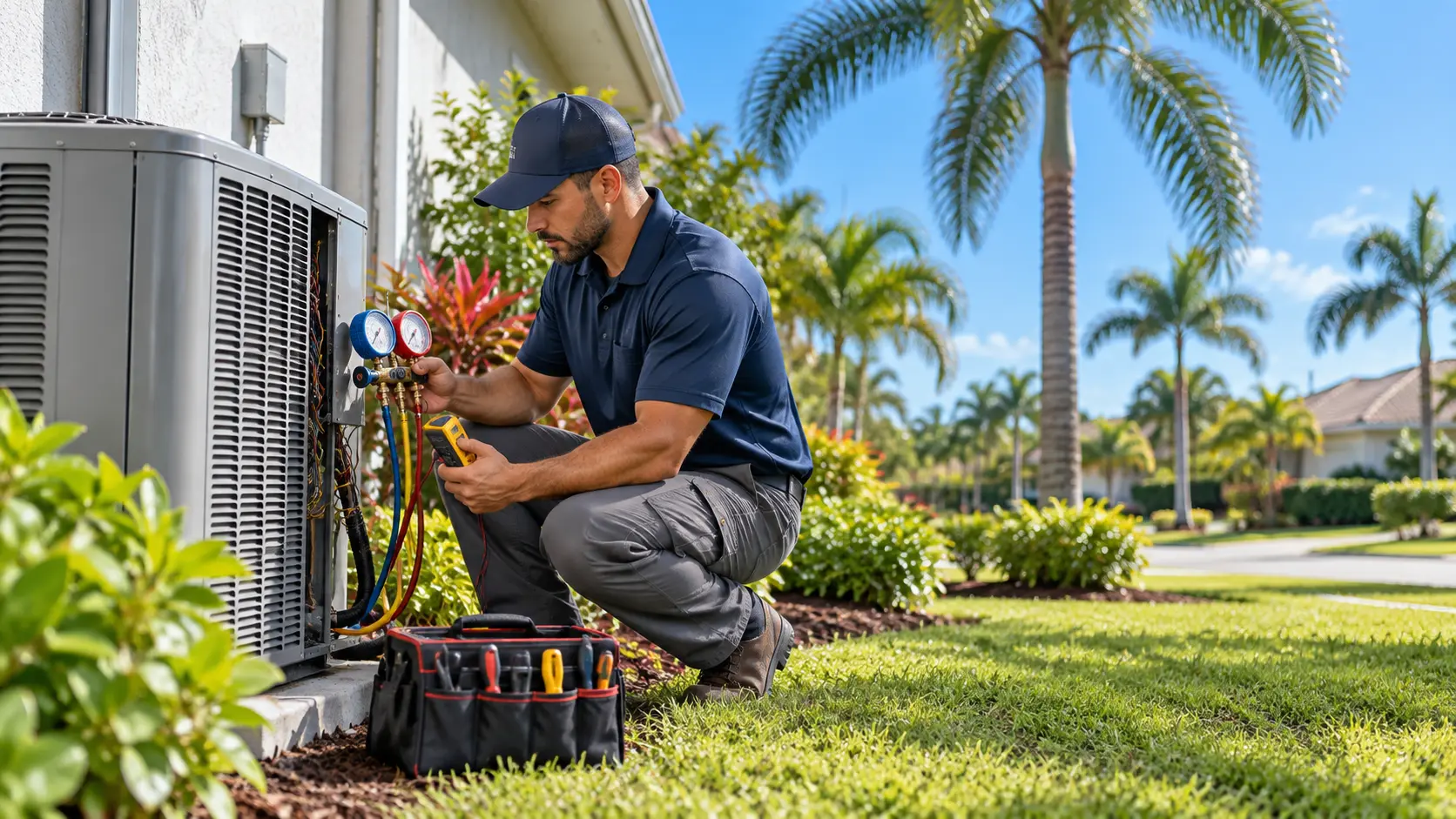
Different homes, different cooling problems
An older house that has had two or three systems installed over the years can carry the history of every one of them: abandoned duct runs, a return that was sized for different equipment, a closet air handler squeezed into a space that makes filter changes awkward. Newer construction often has tighter envelopes and better insulation but often rely on a single central return and long duct runs to reach bedrooms. Both situations produce the same complaint — one part of the house never gets comfortable — for entirely different reasons.
Because of that, diagnosis here starts with airflow rather than with the outdoor unit. Filter condition, return sizing, register output and duct integrity explain a large share of comfort complaints, and none of them require touching the refrigerant circuit. When those check out, attention moves to the equipment itself.
Coastal air is hard on outdoor equipment
Closer to the Indian River and the beachside, salt exposure works on the condenser continuously. Aluminum fins corrode, fasteners seize, and electrical contacts develop resistance that shows up as a contactor or capacitor failure sooner than it would inland. A coil that looks fine from a few feet away can be significantly degraded up close.
Regular rinsing helps more than anything else, along with keeping landscaping and stored items clear of the cabinet so air can move through all four sides. Those tasks are part of a routine maintenance visit, and they are worth doing between visits as well.
Humidity is the complaint behind many “it's not cooling” calls
A system can seem to be failing when the thermostat is actually being satisfied. What is missing is moisture removal. A house at 75 degrees with high indoor humidity feels warmer and stickier than a drier house at 77. The causes are usually short cycling, excessive blower speed, or return-side leaks pulling humid attic air into the system. Sorting that out is covered in more depth under indoor air quality and humidity and ductwork repair.
Common AC repair issues
Capacitors and contactors are among the most frequent failures, along with condensate drain blockages, condenser fan motors, blower motors and thermostat problems. Refrigerant leaks turn up on older systems, particularly at the service valves and coil joints. When an air handler is in a garage or closet, water problems become visible fast; when it is in the attic, a backed-up drain often shows up first as a ceiling stain. Any of those symptoms is worth reporting on the call, because it changes what gets checked first.
Heat pumps and straight cooling systems
Both types of systems are found in Florida homes. A heat pump shares nearly every cooling component with a conventional system, adding a reversing valve, defrost control and auxiliary heat. Cooling complaints are diagnosed the same way; heating complaints add those extra parts to the list. Details are on the heat pump repair page.
Describe what your system is doing
Call 321-334-2567 or send details through the service request form. Symptom, system type and age are usually enough to narrow the likely cause before anyone looks at the equipment.
Nearby areas
Coverage also includes West Melbourne, Grant-Valkaria and the Palm Bay neighborhoods listed on the service areas page.