
1. Load Calculation
Before anything is ordered, the correct starting point is a room-by-room load calculation that accounts for square footage, insulation, window area and orientation, and ceiling height — not a rule of thumb based on the old unit's tonnage. Oversizing is a common mistake because bigger equipment sounds like more cooling power, but in a humid climate, an oversized system satisfies the thermostat's temperature setting before it has run long enough to pull adequate moisture out of the air. The result is a house that reads cool but feels damp.
2. Matching Indoor and Outdoor Equipment
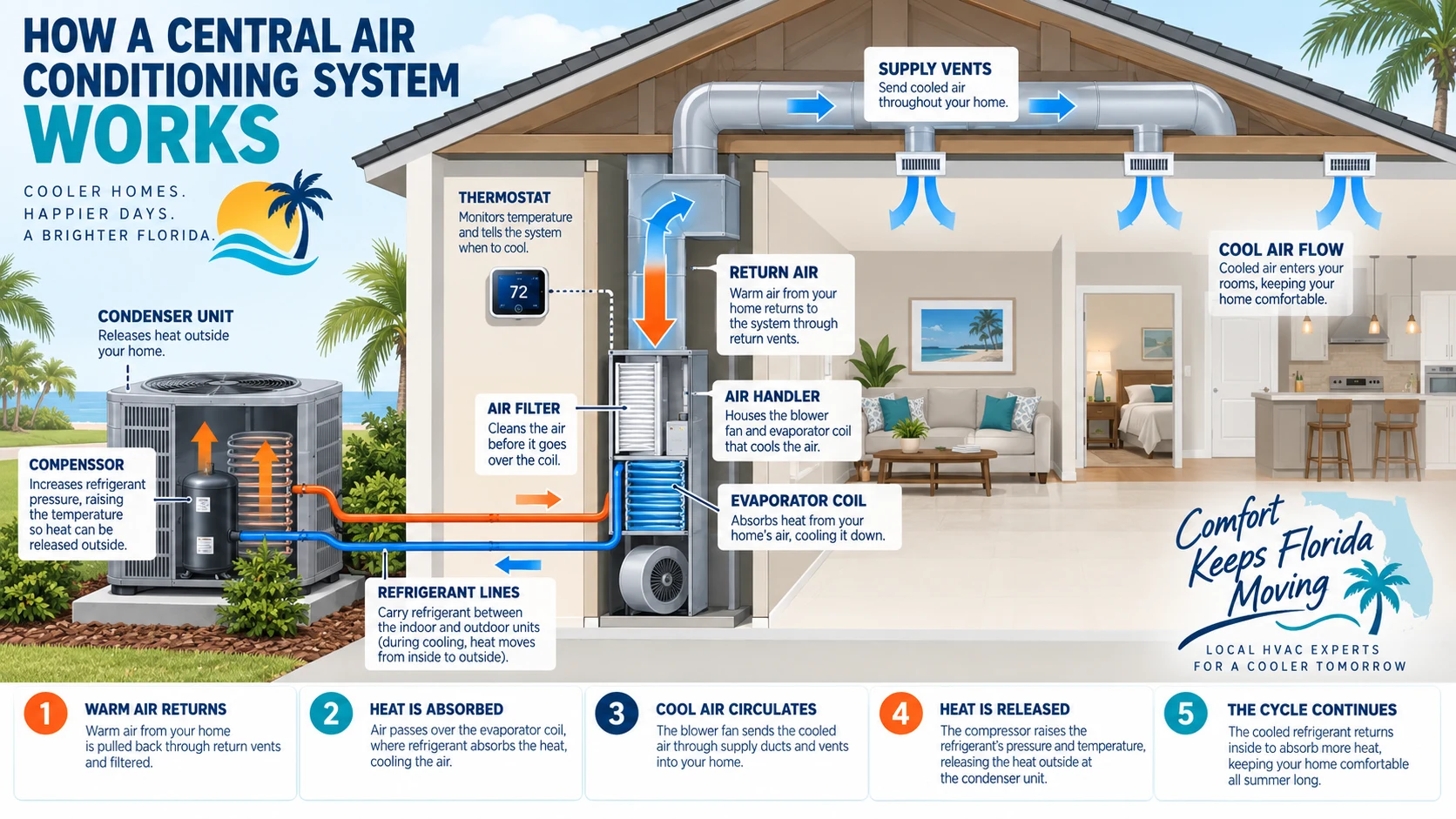
The outdoor condenser and indoor coil (and, in many cases, the air handler or furnace) are tested and rated together by the manufacturer. Pairing a new condenser with an old, mismatched coil can reduce efficiency and, if refrigerant types don't align, may not function correctly at all. Installation planning includes confirming the full equipment set is compatible rather than treating the outdoor unit as a standalone swap.
3. Line Sets and Refrigerant Type
The refrigerant lines connecting indoor and outdoor equipment need to be sized for the new system's refrigerant type and capacity. Reusing old line sets is sometimes possible after cleaning and pressure testing, but line diameter and refrigerant compatibility both have to check out first — an undersized or contaminated line set can undermine even correctly matched equipment.
4. Air Handler Location and Drain Routing
Where the air handler sits — garage, closet, attic — affects service access and how condensate drainage is routed. Drain lines need consistent slope to a proper termination point, and a float switch should be installed to cut power to the system if the primary drain backs up, protecting the space below from water damage.
5. Duct Condition
New equipment moves a specific volume of air through the duct system, and ducts that are leaky, undersized, or crushed limit how much of that air actually reaches the rooms it's meant for. Assessing duct condition before installation — and repairing or resizing runs where needed — is part of making sure the new equipment's capacity translates into cooling at the registers. See our page on ductwork repair for more on common duct issues.
6. Electrical and Disconnect
New equipment may draw different amperage than what it's replacing, which means the breaker, wiring gauge, and outdoor disconnect need to be checked against the new equipment's electrical specifications rather than assumed to carry over from the old system.
7. Thermostat Compatibility
Multi-stage compressors and variable-speed blowers rely on specific wiring and control signals. An older single-stage thermostat may not support those features even if it physically fits the wall plate, so thermostat compatibility gets confirmed as part of planning rather than assumed. See our thermostat page for related troubleshooting.
8. Permits and Inspection
AC installations in Florida are generally subject to local permitting and inspection requirements. Homeowners should confirm with their chosen contractor how permitting is being handled for their specific project and municipality.
9. Commissioning and Airflow Verification
Once equipment is in place, commissioning checks that it's actually performing to specification — refrigerant charge, static pressure and airflow, temperature split across the coil, and drain and float switch function. This step is what confirms an installation is complete, rather than just physically finished.
Planning a new AC installation
Call 321-334-2567 or send a request to talk through equipment options for your home.